
What Is the Dividend Tax Rate in the UK for 2026/27?
Receiving dividends can be an efficient way to generate income from investments or take money from a limited company. But with the dividend tax rates changing from 6 April 2026, shareholders and company directors may be wondering how much they will actually keep after tax.
Understanding the new rates, the £500 dividend allowance and how dividends interact with your other income can help you avoid an unexpected tax bill. If you’re unsure how the rules apply to your circumstances, getting advice from a tax advisor in Kent can make your tax planning much clearer.
What Are the UK Dividend Tax Rates for 2026/27?
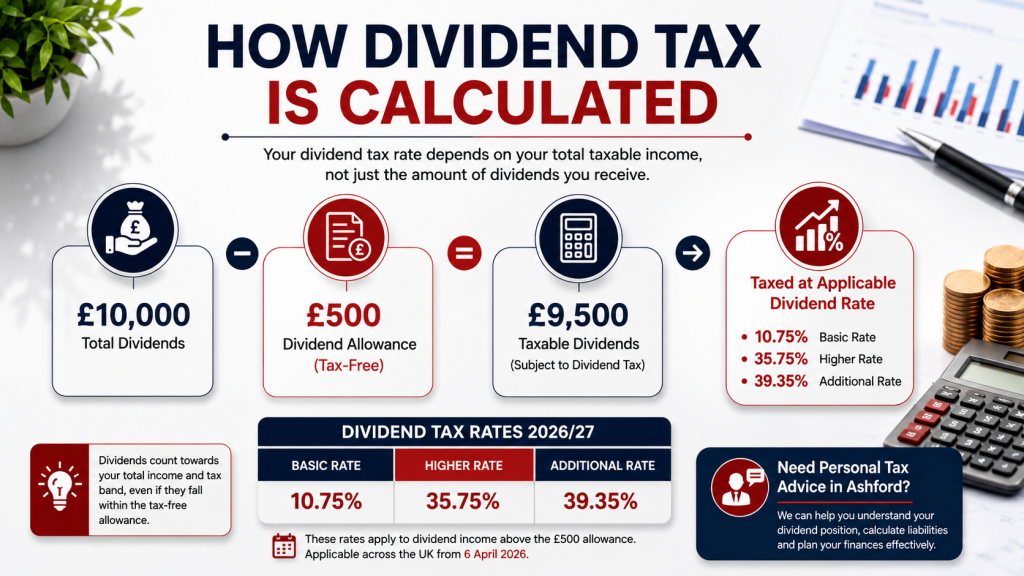
For the 2026/27 tax year, dividend tax rates have increased for basic- and higher-rate taxpayers. The dividend allowance remains at £500. HMRC confirms the following rates apply to dividend income above the allowance:
| Income Tax Band | Dividend Tax Rate 2026/27 |
| Basic rate | 10.75% |
| Higher rate | 35.75% |
| Additional rate | 39.35% |
The 10.75% basic rate and 35.75% higher rate represent a 2 percentage-point increase from 2025/26, while the additional rate remains unchanged at 39.35%. These changes apply across the UK from 6 April 2026.
How Much Dividend Income Is Tax-Free in 2026/27?
The dividend allowance is £500 for 2026/27. This means you do not pay dividend tax on the first £500 of dividend income, although your dividends still count when determining your overall income and tax band.
The allowance is separate from the standard Personal Allowance, which remains £12,570 for 2026/27. However, the Personal Allowance can be reduced for individuals with adjusted net income above £100,000.
Dividends received from investments held within an ISA are not subject to dividend tax.
How Is Dividend Tax Calculated?
Your dividend tax rate depends on your total taxable income, rather than simply the amount of dividends you receive.
For example, suppose you receive £10,000 in dividends during 2026/27 and have already used your relevant Personal Allowance with other income. The first £500 falls within the dividend allowance. The remaining £9,500 is taxable at the rate corresponding to where your income falls within the tax bands.
At the basic dividend rate, £9,500 would produce a dividend tax liability of £1,021.25. If the same taxable dividend amount fell entirely within the higher rate, the liability would be £3,396.25.
Your actual liability can differ where dividends span more than one tax band, so simply applying one percentage to your total dividends may produce the wrong result.
Why Do Dividend Tax Changes Matter for Company Directors?
Dividends are particularly relevant to limited company directors and shareholders, who may receive a combination of salary and dividends. Because dividends sit alongside other taxable income when determining your tax position, the amount you draw can affect which rate applies.
This makes it important to consider the overall picture rather than treating dividends as completely separate from your salary or other income. Good tax planning can help you understand the consequences before deciding how much income to take.
Do You Need Personal Tax Advice in Ashford?
If you receive dividends from investments or your own company, working out the correct tax treatment can become complicated—particularly when you have multiple income sources, changing tax bands or Self Assessment obligations.
Professional personal tax advice Ashford can help you understand your dividend position, calculate potential liabilities and plan your finances around the current rules. Rather than waiting until a tax return is due, discussing your circumstances in advance can help reduce the risk of avoidable mistakes.
How Can Tax First Consultant Help?
At Tax First Consultant, we understand that dividend taxation is not simply about knowing a percentage. Your wider income, allowances, investments and company arrangements can all affect your tax position.
We provide tailored tax guidance to help individuals and business owners understand their obligations and make informed decisions. If you need support with dividend taxation, Self Assessment or broader personal tax planning, our team can help you navigate the rules with greater confidence.
Contact Tax First Consultant today for professional advice tailored to your circumstances and make your 2026/27 dividend tax planning more straightforward.
FAQs About Dividend Tax in 2026/27:
The rates are 10.75% for basic-rate taxpayers, 35.75% for higher-rate taxpayers and 39.35% for additional-rate taxpayers, after the £500 dividend allowance.
Yes. The ordinary dividend rate increased from 8.75% to 10.75%, while the upper rate increased from 33.75% to 35.75%. The additional rate remains 39.35%.
The dividend allowance is £500. Dividend income above this amount may be taxable depending on your Income Tax band.
No. Dividends from shares held within an ISA are not subject to dividend tax.
Yes. Dividend income forms part of your overall income when determining which tax rates apply. This means substantial dividend income can move some income into a higher tax band.


