
IR35 Explained for UK Freelancers: What You Must Know to Stay Compliant and Tax-Efficient
Are you a freelancer or a contractor working in the UK? Then, you might have come across the term- IR35. It is one of the rules that can leave you confused at first. Even though it might be a little difficult for people who have just heard about IR35, it is necessary to be familiar with this to stay compliant and avoid unnecessary tax bills.
At its core, IR35 is designed to check whether a person is genuinely self-employed or effectively working like an employee through a limited company.
What is IR35 in Simple Terms?
IR35, also known as the off-payroll working rules, looks at your working relationship with a client. If you operate like an employee but invoice through your company, HMRC may classify you as “inside IR35.”
This means you will be taxed in the same way as an employee, with income tax and National Insurance contributions deducted at source.
Inside Vs. Outside IR35- What’s the Difference
The difference between these two matters is more than a freelancer realises-
Inside IR35- You need to pay employee-level taxes, which can significantly reduce the amount you take home.
Outside IR35- You are treated as a genuine contractor and allowed to operate more tax-efficiently.
Your status depends on various factors, such as control, substitution, and mutuality of obligation.
Who Decides Your IR35 Status?
For medium and large-sized private sector clients, it is the client’s responsibility. For small businesses, the contractors need to evaluate their own status.
Either way, you are responsible for ensuring this is done correctly to avoid any penalty or backdated taxes in the near future.
Common Mistakes Freelancers Make
When it comes to off-payroll working rules, many contractors fall into the same traps-
- Assuming all contracts are outside IR35
- Relying only on contract wording instead of actual working practices
- Not keeping proper financial and payroll records
- Ignoring HMRC guidance until it is too late
IR35 is about how you actually work day-to-day, not just paperwork.
How Tax First Consultants Ltd Can Support You :
Navigating IR35 is not something you have to do alone. With the right support, you can stay compliant while keeping your finances organised and efficient.
Tax First Consultants Ltd works closely with freelancers and small businesses, offering practical, reliable support tailored to real-world needs.
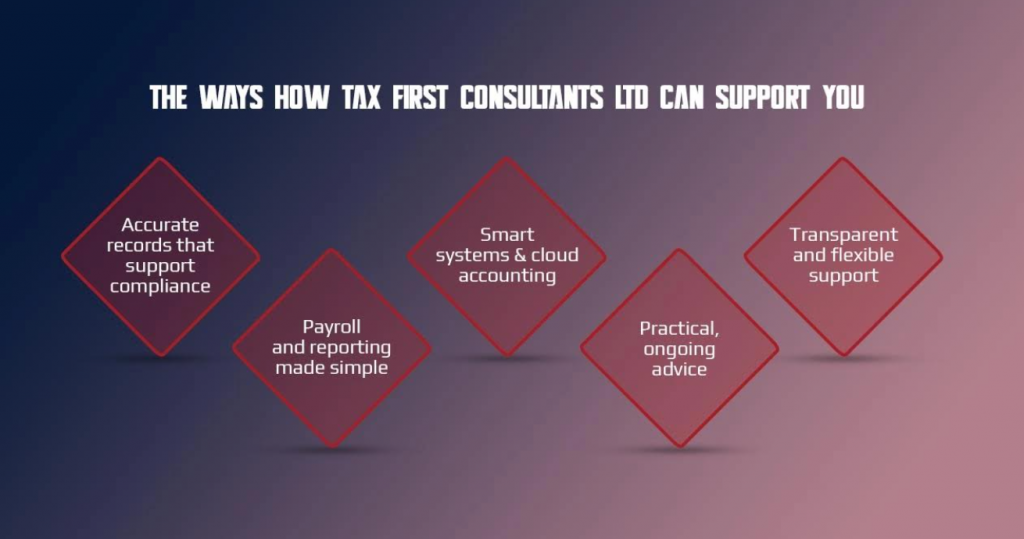
Accurate records that support compliance :
Having clear, well-maintained financial records is essential under IR35. Their bookkeeping services in Kent help ensure your income, expenses, and payroll data are accurate and up to date. Freelancers can reduce the risk of errors and demonstrate compliance if HMRC ever reviews their case.
Payroll and reporting made simple :
If you fall inside IR35, payroll obligations can quickly become complex. Their team can manage payroll processes and ensure everything is reported correctly, so you avoid unnecessary stress.
Smart systems and cloud accounting :
Using tools like QuickBooks, Sage, and Xero, they help you build efficient systems that reduce manual work and improve accuracy. This is especially valuable when dealing with ongoing contract work and multiple income streams.
Practical, ongoing advice :
Whether you need a reliable tax advisor in Kent or are looking for personal tax advice on IR35 in Ashford, their experienced team provides clear guidance that helps you make informed decisions.
Transparent and flexible support :
With fixed monthly packages and a transparent approach, you always know what to expect. This makes it easier to manage your finances without worrying about unexpected costs.
Frequently Asked Questions :
1. How can I tell if I am inside or outside IR35?
It depends on how you work. Factors like control, independence, and substitution matter. You can take professional advice, which is often the safest approach.
2. Do I need bookkeeping if I am a freelancer under IR35?
Yes. Accurate records are essential for compliance, tax reporting, and avoiding issues with HMRC, especially if your status changes between contracts.
3. Can an accountant help reduce IR35 risks?
Absolutely. A good accountant can review your setup, ensure proper reporting, and guide you on best practices to stay compliant and financially efficient.


