
How SDLT Impacts Disabled Persons Trusts: A Guide on Tax for Consultants
Have you ever wondered how to plan for the future of a loved one who has a disability? Many families want to ensure their children or relatives are financially secure, even when they can no longer provide direct assistance. That is where a disabled person’s trust can generally make a big difference.
A trust like this always helps to protect money and property, so it is used only for the person’s care as well as well-being. Besides, it also helps them to stay eligible for state benefits while keeping their long-term financial support secure. But when it comes to buying a property under the trust, things can get tricky, especially with Stamp Duty Land Tax (SDLT). This extra cost can surprise many families who are simply trying to do the right thing.
So, how does SDLT really affect disabled persons’ trusts, and what are the other tax benefits that come with them?
Below, we will explain everything in simple terms, from how these trusts work to what tax advantages they offer, and why speaking to a tax consultant near you can easily help you to make the best decisions for your family’s future.
Why is This Considered an Unfair Treatment?
The surcharge can push SDLT from £15,000 to £40,000 on a £500,000 property, a steep and often unintended outcome. However, the problem stems from the way legislation defines different types of trusts:
- Interest in Possession (IIP) trusts – where the beneficiary has the right to occupy or receive income from the property, usually avoid the surcharge.
- Discretionary trusts, even if for a disabled person, do not automatically qualify for this exemption.
That means trustees of discretionary trusts could end up paying thousands more, even though their sole purpose is to house a vulnerable beneficiary.
What Are the Tax Benefits of a Disabled Person’s Trust?
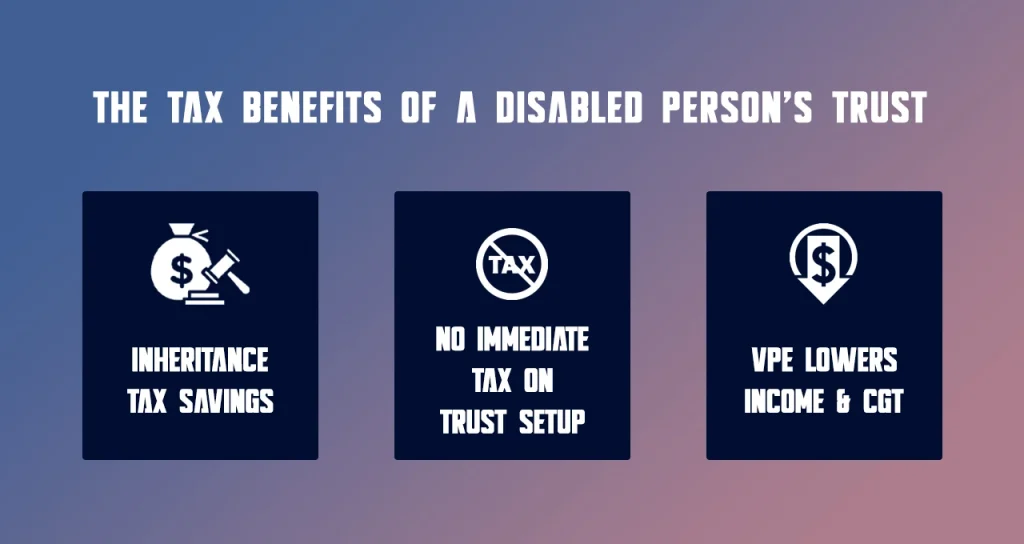
When you are setting up a trust for someone with a disability, families often worry about how much tax they might have to pay. The good news is that a disabled person’s trust offers several tax advantages that can easily make it easier to manage money efficiently and protect a loved one’s future. Even though there are some concerns about Stamp Duty Land Tax (SDLT), the other tax rules make these trusts very helpful in the long run.
Now, let’s take a closer look at the main tax benefits and how they work in simple terms.
1. Inheritance Tax Savings :
One of the biggest benefits of a disabled person’s trust is that it gets special treatment under inheritance tax (IHT) rules. Normally, trusts can face extra charges every ten years or when money leaves the trust, known as “ten-year” or “exit” charges. But with a disabled person’s trust, those extra charges do not apply.
That means more of your money stays where it is meant to, supporting your loved one, not going to the tax office. In fact, it is a simple way to make sure long-term financial help remains protected from unnecessary taxes.
2. No Immediate Tax When You Set Up the Trust :
When someone places assets like cash or property into a disabled person’s trust, it is treated as a potentially exempt transfer. That is a fancy way of saying you do not have to pay inheritance tax right away.
As long as the person who set up the trust lives for at least seven years after creating it, no inheritance tax will be due on those assets at all. That helps families plan without worrying about an instant tax bill, giving them peace of mind while supporting their disabled family member.
3. Lower Income and Capital Gains Tax Through a VPE :
Each year, trustees can make what is called a Vulnerable Person’s Election (VPE). This allows the income and gains from the trust to be taxed at the same rate as the disabled person’s personal tax rate instead of the usually higher trust rates.
In simple words, this can mean paying much less tax each year on the money the trust earns. It ensures the disabled person benefits from fairer tax treatment – just as if they received the money directly in their own name.
This is especially helpful when the disabled person’s income is small or they fall into a lower tax band, as the trust’s tax bills can be reduced quite a bit.
Can HMRC Fix the SDLT Issue for Disabled Persons’ Trusts?
There is growing recognition that the FA 2003, Sch 4ZA rules need review. However, many professionals hope that HMRC will update them so that discretionary trusts established for disabled beneficiaries are not unfairly penalised.
Until then, trustees should proceed with caution. Before purchasing property under such a trust, it is crucial to seek advice from a qualified tax consultant.
How Can a Tax Consultant Near You Help?
If you are setting up or managing a disabled person’s trust, or are unsure about SDLT implications, a tax consultant near you can:
- Analyse your trust’s structure for compliance.
- Advice on making a Vulnerable Person’s Election.
- Recommend ways to reduce SDLT as well as inheritance tax exposure.
- Help with documentation and HMRC correspondence.
Comparison Table: SDLT Liability for Trust Types :
| Type of Trust | SDLT Surcharge Applicable? | Use Case |
| Disabled Person’s IIP Trust | No | The beneficiary has the right to occupy the property. |
| Disabled Person’s Discretionary Trust | Yes (5% surcharge) | Trustees control assets; the beneficiary has no direct right. |
| Bare Trust | No | Simple ownership on behalf of the beneficiary. |
Need Expert Help with Trust and Tax Matters?
Navigating tax for consultants and trustees managing disabled persons’ trusts does not have to be confusing. At Tax First Consultants, our experienced tax experts can help you understand SDLT, inheritance tax, and other trust-related matters, ensuring your loved one’s financial security is protected without overpaying tax.So, contact us today for personalized advice from a trusted tax consultant near you.


